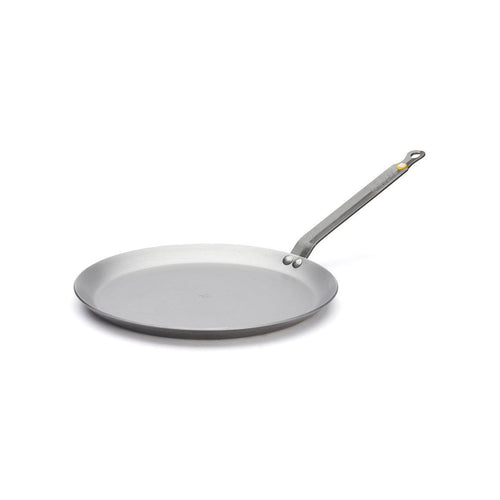
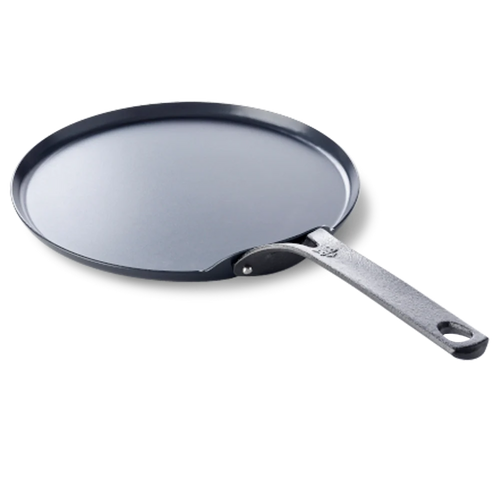
Pancake pans

A good pancake pan makes the difference between a failed, sticky mess and a fluffy, golden-brown pancake. Thanks to their low rim and even heat distribution, pancake pans are specially designed for effortless baking and easy flipping. Whether you opt for a classic crêpe, a thick American pancake, or a stack of traditional Dutch pancakes: with the right pan, every baking moment becomes a celebration.


At Culicartel, you’ll find pancake pans for every type of hob – from induction to gas. Choose from models with non-stick coating, cast iron, or aluminium, depending on your preference. Our top brands guarantee quality and ease of use, so you can enjoy perfect results every time. Discover your new favourite in our range!

Read blog

Cast iron pans

A heavy and durable material, resistant to high temperatures. The pan lasts for generations. These pans don't warp and are oven-safe. Heating up and cooling down takes a bit longer, but once hot it stays hot for a long time. Don't wash the pan in the dishwasher.

Carbon steel pans

Lighter than cast iron and they heat up faster. These pans are seasoned to create a non-stick layer. Warm the pan up after washing to dry it completely. This prevents rust.

Stainless steel pans

Stainless steel is very light and doesn't rust. These pans are also dishwasher-safe. They can withstand high temperatures but cool down quickly.

Copper pans

These pans don't just look stylish, they're also very durable. Good copper unfortunately doesn't come cheap, but the quality is fantastic. Working on professional dishes like sauces, jam or risotto where you need perfect temperature control? Then the copper pan is the perfect choice.

Aluminium pans

At a lower price you give up some quality, but they're very pleasant to use. They're light pans that are easy to clean. They have excellent heat conduction and are therefore ready to use quickly.

Filter

Sort

Frequently asked questions

  • What is the difference between a pancake pan and a regular frying pan?

    A pancake pan has a lower, often slightly sloped edge than a standard frying pan, making it easier to flip or toss pancakes. In addition, a pancake pan usually has a completely flat base for even contact with the heat source. An ordinary frying pan has higher sides, which is useful for sauces, but makes flipping pancakes more difficult.

  • Can you also fry pancakes in an ordinary frying pan?

    Yes, that’s perfectly fine. A regular frying pan with a flat bottom is well suited for pancakes; a proper pancake pan simply makes flipping them easier thanks to the low rim. If you often bake a lot of pancakes or crêpes, a special pancake pan is a worthwhile investment. If you only bake them occasionally, your existing frying pan will be sufficient.

  • Which pancake pan is suitable for induction?

    For induction, you need a pan with a flat, magnetic (ferritic) base. Always check the induction symbol (a spiral-shaped logo) in the product specifications when purchasing; with Braadbaas, it is clearly stated for each model whether it is induction-compatible. If you want to be sure, go directly to the induction pancake pan category.

  • What size pancake pan do I need?

    For classic Dutch pancakes, a diameter of 24 to 28 cm is the most commonly used size. For crêpes, choose a larger, shallower pan of 28 to 30 cm. If you want to make small pancakes or American pancakes, a pan of 20 to 24 cm is perfectly suitable. Choose the size based on the plate you serve on and the space on your stovetop.

  • What is the difference between a pancake pan and a crêpe pan?

    The two look very similar: both have a low rim and a flat base. A crêpe pan is usually just a little larger and shallower, with an almost flat rim, specially designed to spread the batter paper-thin. A pancake pan usually has a slightly higher (but still low) rim, which is convenient for the somewhat thicker Dutch pancake. For home use, they are easily interchangeable; if you mainly make crêpes, a larger, shallower pan is best.

  • Ceramic non-stick coating or cast iron, which is better for pancakes?

    Both have their advantages. A ceramic, PFAS-free non-stick coating is more user-friendly: you need very little oil, the pan is light, does not need to be seasoned, and is easy to clean. Cast iron requires a bit more attention, but provides better heat retention and beautifully crispy edges. For everyday family use, ceramic wins; for the avid baker who loves browning, cast iron wins.

  • Why does my pancake stick to the pan?

    Usually, it's because of one of three things: the pan hasn't been preheated properly, there isn't enough fat in it, or you're flipping too soon. Heat the pan gently over medium heat, use enough butter or oil, and only flip the pancake when the top has dried out and the edges come away. With a coating-free pan made of sheet steel, cast iron, or stainless steel, it also helps enormously to season or well-grease the pan; it will release more and more easily over time. You can read more tips in cooking without sticking in a stainless steel pan.

  • Can a pancake pan go in the dishwasher?

    That depends on the material. It is best to wash ceramic pans by hand; hand washing significantly extends the life of the coating. Steel plate and cast iron (bare) pans should never go in the dishwasher: wash them with warm water and a soft brush, dry them thoroughly and rub them lightly with oil. Stainless steel and enameled cast iron are generally dishwasher-safe, although they stay nicer when washed by hand. Always check the manufacturer's instructions.

  • How long does a pancake pan last?

    A high-quality ceramic pancake pan will last several years with normal use, depending on how careful you are with kitchen utensils and washing. A solid steel, cast iron or stainless steel pan will last for decades with proper care; well-maintained cast iron is sometimes passed down from generation to generation. Non-coated pans therefore have the longest lifespan in the long term.

  • How much fat should I use in a pancake pan?

    With a good ceramic non-stick coating, you only need a thin layer of butter or oil; a walnut-sized pat of butter is enough for a couple of pancakes. Use slightly more fat with carbon steel, cast iron, and stainless steel, especially at the beginning. Avoid aerosol sprays containing lecithin, as they can damage non-stick coatings over time.

  • What are the best brands of pancake pans?

    Well-known and trusted brands at Braadbaas include De Buyer and Skottsberg (carbon steel), Greenpan and Demeyere (ceramic, PFAS-free), Le Creuset (cast iron) and BK. Each brand has its own strengths, from traditional cooking with carbon steel to the convenience of ceramic. Compare the models in the pancake pan collection to make the best choice for your cooking style.

What you need to know about Pancake pans

This is what you need to know about the pancake pan

A pancake pan differs from an ordinary frying pan by its low, often slightly sloped edge and its completely flat base. That low edge makes flipping or tossing a pancake much easier, while the flat base ensures even contact with the heat source, without hot spots or a raw piece in the middle. For classic Dutch pancakes, you usually choose a diameter of around 24 to 28 cm; for paper-thin crepes, a larger, shallow pan of 28 to 30 cm works best.

Buying a pancake pan — what to look for?

When choosing a pancake pan, four things are decisive: your stove, the material, the size, and the edge height. Always check first whether the pan is suitable for your cooktop. For induction, you need a pan with a flat, magnetic base; for this, specifically view the category induction pancake pans. A low edge makes flipping easier, and a sturdy handle that does not heat up too quickly ensures safe and comfortable cooking. The compatibility is listed for every product, so you won't be faced with surprises. Still don't know which type of pan you are looking for? In the blog which pan do I need? we list the types.

Which pancake pan is right for you? The materials listed

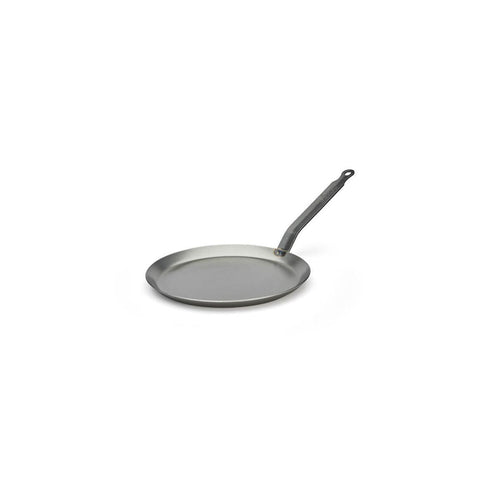
Carbon steel is the choice of the true baking enthusiast. The material is light, strong, and heats up extremely quickly and evenly. Just like cast iron, a carbon steel pan must be seasoned first, but once properly seasoned, it develops a natural non-stick layer that only gets better with use. Think of the De Buyer 'Carbone Plus', the classic De Buyer 'Mineral B', the Skottsberg Carbon Steel or the BK 'Black Steel' with a cast iron handle. Great if you like traditional baking and are looking for a pan that will last for decades. Never seasoned before? Then read how to season a carbon steel pan.

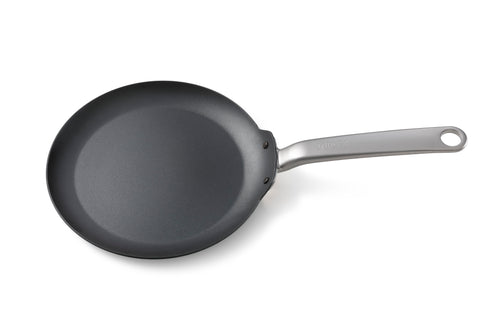
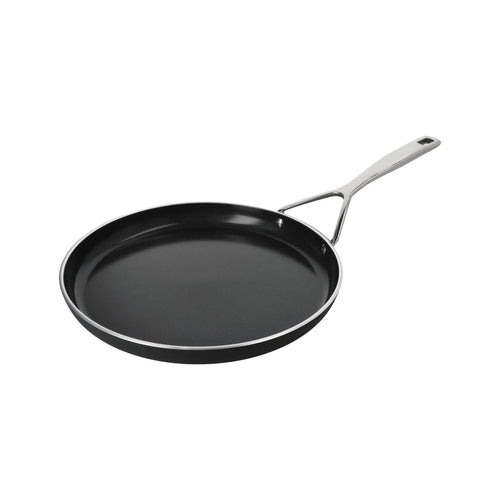
Ceramic non-stick coating is modern and completely PFAS-free. The coating contains no PTFE, PFOA, or other fluorinated compounds, offers an excellent smooth cooking surface, and ensures that pancakes release effortlessly with minimal fat. Easy to clean and great for everyday family use. For example, check out the Greenpan 'Barcelona Pro' or the lightweight Demeyere 'Alu Pro 5 Ceraforce', or browse all PFAS-free pancake pans. Do keep in mind the weak point of ceramic: the layer is more sensitive to scratches and high peak temperatures. Therefore, use silicone or wooden kitchen utensils and cook on low to medium heat.

Enameled cast iron gives you the heat retention and even distribution of cast iron, but with an enameled layer that makes seasoning unnecessary. The pan does not rust and is easy to keep clean. It is quite heavy, though. If you are okay with that, you will cook evenly browned pancakes that release effortlessly. The Le Creuset cast iron pancake pan is the textbook example of this; you can find the full range in the cast iron pancake pans.

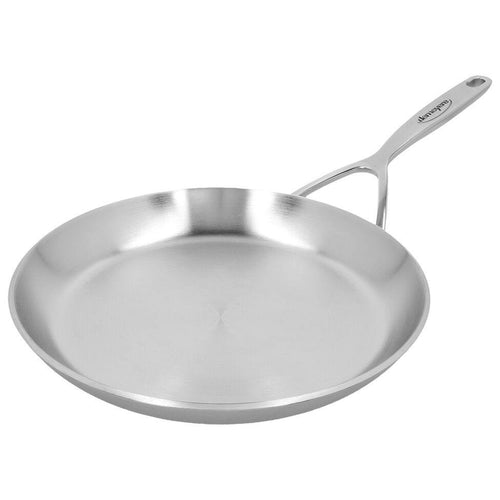
Stainless steel is the most wear-resistant and has no coating at all that can wear off. Stainless steel is scratch-resistant, dishwasher-safe, and hygienic, but it does require a bit more technique: proper preheating and enough fat are essential. The range is deliberately small, with the Demeyere 'Specialties 5' as an example. Once you get to know the pan, you will appreciate the consistent results and the very long lifespan. How to cook in stainless steel without sticking can be found in the blog cooking without sticking in a stainless steel pan.

What can you cook in a pancake pan?

A pancake pan is more versatile than you might think. In addition to classic Dutch pancakes, paper-thin crêpes and thick American pancakes, you can also cook tortillas, omelettes, fritters, rösti and vegetable fritters in it. The low rim and flat base make the pan suitable for almost anything you want to cook quickly and evenly. This makes it one of the most versatile pans in your kitchen. Looking for something else? Also check out our frying pans.

How to prevent your pancake from sticking

By far the most frequently asked question about making pancakes is about sticking, and that is rarely due to the pan itself. Three things make the difference. Heat the pan gently over medium heat so that the heat spreads evenly across the base, especially with a heavy pan. Don't be stingy with fat: a knob of butter or a thin layer of oil prevents sticking and also gives that delicious golden-brown colour. And most importantly: only turn your pancake over when the top is visibly dry and the edges have come loose. Is it still sticking? Then you are turning it too early. With sheet steel, cast iron and stainless steel, a well preheated, seasoned or oiled pan will naturally release more and more as you use it more often.

What is the best pancake pan?

The best pancake pan is the one that best suits your situation. For everyday family use, a lightweight ceramic pan is the smartest choice: PFAS-free, easy to use, quick to clean and ready to use straight away without seasoning. If you want to invest in traditional cooking and a pan that will literally last for generations, then sheet steel or enameled cast iron is unbeatable. And if you like a coating-free pan that can withstand anything, then choose stainless steel. At Braadbaas you will find top brands in each of these materials that score highly on all fronts; compare the range and make the choice that suits you. If you are unsure about the material, read what material should I buy pans in?

Buy a pancake pan at Braadbaas

At Braadbaas you buy your pancake pan from a specialist cookware store. All products are 100% genuine, come with an official warranty and can be returned free of charge. Our specialists in the store in Maassluis know the difference between sheet steel, ceramic, cast iron and stainless steel by heart and are happy to help you choose, in the store, via WhatsApp or via the chat. You can find a complete overview in the pancake pan collection and in the entire cookware range.