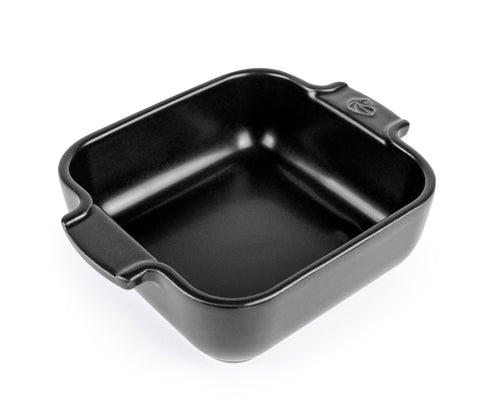
Oven dishes

At Culicartel you'll find oven dishes and roasting pans from Peugeot, Le Creuset, Demeyere, Skottsberg and BARE Cookware. A ceramic or stoneware dish for your lasagne, gratin or roasted vegetables, or a sturdy metal roasting pan for a whole chicken or rolled roast: it all depends on what you're cooking. Cast iron holds heat for a long time, stainless steel is light and virtually maintenance-free, and carbon steel heats up in no time.

Read blog

Cast iron pans

A heavy and durable material, resistant to high temperatures. The pan lasts for generations. These pans don't warp and are oven-safe. Heating up and cooling down takes a bit longer, but once hot it stays hot for a long time. Don't wash the pan in the dishwasher.

Carbon steel pans

Lighter than cast iron and they heat up faster. These pans are seasoned to create a non-stick layer. Warm the pan up after washing to dry it completely. This prevents rust.

Stainless steel pans

Stainless steel is very light and doesn't rust. These pans are also dishwasher-safe. They can withstand high temperatures but cool down quickly.

Copper pans

These pans don't just look stylish, they're also very durable. Good copper unfortunately doesn't come cheap, but the quality is fantastic. Working on professional dishes like sauces, jam or risotto where you need perfect temperature control? Then the copper pan is the perfect choice.

Aluminium pans

At a lower price you give up some quality, but they're very pleasant to use. They're light pans that are easy to clean. They have excellent heat conduction and are therefore ready to use quickly.

Filter

Sort

Frequently asked questions

  • What is the difference between an oven dish and a roasting pan?

    An oven dish is the broad category: any heat-resistant dish for use in the oven, usually made of ceramic or earthenware, with raised edges for lasagna, gratin, or vegetables. A roasting pan is technically an oven dish with two sturdy handles, usually made of metal and specially designed for large cuts of meat. Roasting pans are generally heavier and sturdier, can also be used on the stove, and are often combined with a roasting rack on which the meat rests, so that it cooks evenly and becomes crispy all around.

  • Can a ceramic or earthenware oven dish go on the stove or on induction?

    No. Ceramic and earthenware oven dishes (such as the Peugeot Appolia or the earthenware dishes from Le Creuset) are made for the oven and not for a direct heat source. On a gas or electric burner, they can crack due to localized heat, and on induction they won't work anyway because the material is not magnetic. Do you want to brown meat or vegetables first and then slide the same dish into the oven? Then choose a metal roasting pan made of cast iron, stainless steel, or carbon steel – those are suitable for the stove and induction.

  • Which material is right for me: ceramic, earthenware, cast iron, stainless steel, or carbon steel?

    For classic oven dishes and meals that go from oven to table, ceramic and earthenware are ideal: gentle in heat distribution and beautiful on the table, but for the oven only. If you want to sear large pieces of meat first and then roast them, choose metal. Cast iron is best for heat retention and slow roasting, stainless steel for convenience and versatility (lightweight, fast, dishwasher-safe), and carbon steel for those who want to work with a lightweight pan and build up a natural non-stick layer without a synthetic coating. So there is no universal 'best' – it depends on your cooking style.

  • What size roasting dish do I need for a whole chicken or roast?

    For an average roast chicken or roulade, you need a dish measuring approximately 30×20 cm. A larger chicken, a whole leg of lamb, or a turkey requires a larger roasting pan, around 35×25 cm or bigger. Always allow a few centimeters around the meat so that the hot air can circulate properly and the meat cooks evenly. For large roasts, a roasting rack is a useful addition.

  • Why should I use a roasting rack?

    A roasting rack lifts the meat just above the bottom of the pan. This allows fat and juices to drip away instead of the meat stewing in its own juices, and also allows hot air to circulate underneath the meat. The result is more evenly cooked meat with a crispy crust all around. You can then use the juices collected at the bottom to make a perfect sauce. A rack really makes a difference, especially for a whole chicken, ribs, or a turkey.

  • How do I prevent my casserole dish from cracking?

    Cracks are usually caused by thermal shock: a temperature change that is too large or too rapid. Therefore, do not place a cold ceramic or earthenware dish in a very hot oven, but allow it to warm up gradually, and never place a hot dish directly on a cold or wet countertop – place a dry trivet or tea towel underneath it. After use, let the dish cool before rinsing it. Also avoid heating empty dishes at high temperatures. This will ensure your oven dish lasts for years.

  • Are the oven dishes dishwasher-safe?

    That varies depending on the material. Ceramic, earthenware, and stainless steel are generally dishwasher-safe, although hand washing will always make them last the longest. It is better to wash enameled cast iron by hand to preserve the enamel, and carbon steel should always be washed by hand: this material has an oiled layer that would be stripped away in the dishwasher. If in doubt, check the specifications on the product page.

  • Can I also use an oven dish under the grill or in the microwave?

    Ceramic and earthenware dishes are usually suitable for the oven, grill, and microwave, provided you avoid extreme temperature shocks. Metal roasting dishes are not suitable for the microwave, but can be used under the grill and on the stove. Metal components such as a roasting rack can also be used under the grill. To be safe, always check the specified maximum temperature and suitable uses for the specific model.

  • How do I care for a cast iron or carbon steel roasting pan?

    Clean an enameled cast-iron roasting pan with warm water, a soft sponge and mild dishwashing liquid; do not use abrasive scouring agents and let the pan cool down first. After use, rinse a carbon steel roasting pan with warm water (without harsh dishwashing liquid), dry it thoroughly immediately and rub it lightly with a neutral oil to preserve the natural non-stick layer. Want to know more about seasoning and caring for sheet steel and cast iron? Read our seasoning service – we will season your pan for free if you wish.

  • What are some good brands for oven dishes and roasting pans?

    For ceramic oven dishes, Peugeot (Appolia) is a reliable choice, while Le Creuset makes both earthenware oven dishes and iconic cast-iron roasters. For metal roasters, Demeyere (professional stainless steel), Skottsberg (solid stainless steel with rack) and BARE Cookware (durable carbon steel) are strong options. At Braadbaas, you will find these brands side by side, allowing you to compare them by size, material, compatibility with your heat source and price.

What you need to know about Oven dishes

This is what you need to know about oven dishes

An oven dish is a wide, shallow dish that can withstand the high temperatures of the oven – depending on the material, usually up to 250 °C or more. The main difference between all oven dishes lies in the material, and that determines not only how your dish cooks, but also where you can and cannot use the dish. Ceramic and earthenware (think of the well-known Peugeot Appolia dishes or the earthenware dishes from Le Creuset) are made for the oven and the table: they distribute heat gently and evenly and keep your dish warm for a long time, but they are not suitable for a direct heat source such as the stove or induction. Metal roasting dishes made of cast iron, stainless steel or carbon steel can: with them you first brown meat on the stove and then slide the dish straight into the oven, without extra washing up.

In short: if you mainly choose gratins, oven dishes and roasted vegetables, then a classic ceramic or earthenware oven dish is ideal. If you want to first sear large pieces of meat and then let them roast, take a look at the roasting dishes. Do you want the complete picture first? View the entire cookware range or the baking section.

Oven dish or roasting dish – what is the difference?

The terms are often used interchangeably, but there is a practical distinction. An oven dish is the broad category: any heat-resistant dish for use in the oven, usually made of ceramic or earthenware, with raised edges for lasagna, gratin, vegetables or a tart. A roasting dish is a sturdier, usually metal version with two large handles, made for large pieces of meat. Because a roasting dish is made of metal, you can also use it on the stove and it is often combined with a roasting rack, on which the meat rests just above the bottom. This allows fat and meat juices to drip down underneath and makes your meat crispy all around instead of stewing in its own juices.

Buying an oven dish: what to look for?

When choosing an oven dish, it comes down to three questions: what are you going to prepare in it, how big is your oven and how do you want to clean the dish. For large pieces of meat such as a whole chicken, lamb leg or roulade, you need a spacious dish or roasting dish; for a gratin, a vegetable dish or a dessert, a more compact size will suffice. Also pay attention to the height of the edges: higher edges hold moisture and sauce better and are great for stews, while lower edges allow for more air circulation and thus a crispier crust for roasted dishes.

The most important consideration is the heat source. Always check whether the dish suits how you cook: ceramic and earthenware are only oven-safe and must not be used on the stove or on induction, while cast iron, stainless steel and carbon steel roasting dishes are indeed suitable for browning on the stove. Not sure? The material and size specifications are always on the product page, and you can also simply ask us for advice.

Which material is right for you?

The right material for you depends on what you cook, how often you use the dish, and whether you also want to use it on the stove. Here are the main options.

Ceramic is the classic choice for oven dishes that go straight from the oven to the table. Dishes such as the Peugeot Appolia series distribute heat gently and evenly, keep your dish warm for a long time, and look beautiful on the table. Perfect for lasagna, gratins, and oven dishes – exclusively for the oven, not the stove.

Stoneware is very similar and is the specialty of Le Creuset stoneware oven dishes. The glazed surface is scratch-resistant, hygienic, and easy to clean, and the dish is usually dishwasher-safe. Like stoneware, it belongs in the oven, microwave, or on the table, not on a direct heat source.

Enameled cast iron is what you buy if you want something that will last for generations. It heats up slowly and evenly and retains that heat for hours, making it ideal for slow cooking and large cuts of meat. An enameled cast-iron roasting pan, such as those from Le Creuset, goes from the stove to the oven to the table without the need to transfer the food.

Stainless steel is the practical choice. It is lighter than cast iron, heats up quickly, and also cools down quickly, making it easier to control the temperature. Demeyere makes multi-layer stainless steel roasting pans that distribute heat exceptionally evenly, without hot spots. Stainless steel is dishwasher-safe, does not rust, and lasts almost forever.

Carbon steel is gaining popularity among home cooks who want something professional without the weight of cast iron. It heats up in no time, responds instantly to any temperature change, and weighs much less. Just like cast iron, it develops a natural non-stick layer over time by regularly oiling the pan, without a synthetic coating. The BARE Cookware roasting pan with rack is a great example; you can read more about seasoning and maintenance in our seasoning service.

What do you make in an oven dish?

An oven dish can do more than most people think. The classic use is for roasted meat – chicken, roast, lamb leg, or ribs – but an oven dish is just as suitable for oven-roasted vegetables, such as grilled peppers, zucchini, and potatoes. Also think of oven dishes such as lasagna, moussaka, and potato gratin, where the dish goes from preparation to the table. If you use a roasting pan with a rack, you can make perfect spareribs or a whole turkey, with the fat neatly collected at the bottom. And don't forget desserts: a warm brownie, clafoutis, or crumble is best served in a sturdy dish. Looking for inspiration? Browse our recipes.

The best brands for oven dishes and roasting pans

There is no such thing as the best oven dish; it depends on what you are looking for. However, there are brands you can never go wrong with. Peugeot makes the classic oven dish with its ceramic Appolia series: beautiful on the table, available in various sizes and colors. Le Creuset is synonymous with quality, both in stoneware oven dishes and heavy, practically indestructible cast-iron roasting pans in colors such as cherry red and orange-red. Demeyere (Belgian and professional) excels in stainless steel with multi-layer roasting pans that distribute heat exceptionally evenly. Skottsberg offers a solid stainless steel roasting pan with a rack, and BARE Cookware is the sustainable choice with its carbon steel version for those who want to cook without a synthetic coating. At Braadbaas, you will find all these brands under one roof, with honest advice on which one is the best fit for you. Also check out our knowledge base or find a beautiful gift for the cooking enthusiast.